At 2:30 PM, the factory floor feels cooler — but the electricity meter is spinning faster than ever.
The air conditioning is doing its job. Or at least, it seems to be. But behind that comfort lies a hidden cost: over-dependence.
Many facilities rely heavily on HVAC systems to manage temperature. When heat rises, the instinct is simple — increase cooling capacity. But what’s often overlooked is how inefficient this approach becomes over time.
Air conditioners are designed to cool air, not manage airflow across large, dynamic industrial spaces. Without proper air movement, cooled air settles unevenly. Some areas feel comfortable, while others remain warm. This forces the system to work harder, increasing load and energy consumption.
This is where inefficiency begins.
When airflow is not optimised, AC systems cycle more frequently. Compressors run longer. Peak demand spikes. Over time, this leads to higher electricity bills, increased wear, and reduced equipment life.
The solution isn’t always more cooling. Sometimes, it’s better airflow.
Introducing strategic air circulation using BLDC fans changes how cooling works. Instead of relying solely on temperature reduction, facilities begin to focus on air distribution.
By improving airflow:
- Cooled air is distributed evenly
- Temperature differences across zones reduce
- AC load decreases significantly
- Compressor cycles become less frequent
In practical scenarios, facilities have observed:
- Up to 20–30% reduction in HVAC load
- Improved thermal comfort across larger areas
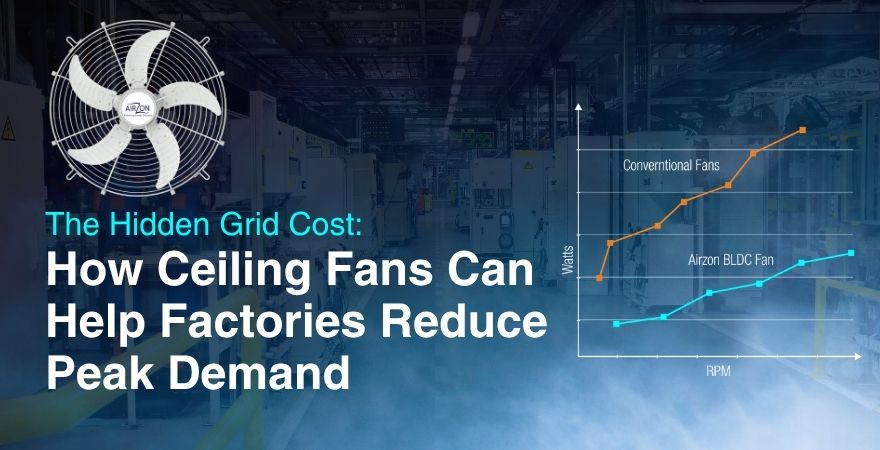
- Lower peak demand during high-load hours
BLDC fans enhance this further. Their energy-efficient motors consume significantly less power, meaning additional airflow doesn’t add to the problem — it solves it.
Airzon’s approach focuses on combining airflow efficiency with durability. With plastic-free, all-metal construction and stable performance under fluctuating voltage, these systems are designed for continuous operation.
Cooling, when done right, is not about lowering temperature alone. It’s about managing how air moves.
And sometimes, the smartest way to reduce cooling costs is not to cool more — but to circulate better.